

Monstera dubia is a charming epiphytic plant that is gaining more and more fans among houseplant lovers. Thanks to its heart-shaped leaves and distinctive growth habit, it is an ideal choice for anyone looking to enrich their interior with something unusual and aesthetically appealing. In this article, we will look at the proper care and propagation of Monstera dubia, with an emphasis on the importance of a sphagnum moss support.
What is Monstera dubia?
Monstera dubia belongs to the same genus as the famous Monstera deliciosa, but differs in its growth habit (shape, structure and manner of growth). It is epiphytic, which means that in the wild it grows on trees and uses their trunks and branches as support. Its small heart-shaped leaves are characterized by dense, compact growth. Its appearance and relatively easy care make it popular among growers.
How to grow Monstera dubia?
1. Light
Monstera dubia prefers bright, indirect light. Direct sunlight can scorch the leaves and cause them to yellow. The ideal place for this plant is in a window facing east or west, where it will receive plenty of diffused light. If the plant does not get enough light, it may grow more slowly and the leaves may be smaller and less distinctive.
2. Temperature
Monstera dubia does best at temperatures between 18-27 °C. Avoid sudden temperature changes and drafts, which could damage the plant. In the winter months, the temperature should not drop below 15 °C.
3. Watering
Water Monstera dubia regularly, but in moderation. The soil should be kept slightly moist, not waterlogged. In winter, reduce watering so the roots do not become overly wet and rot. Let the top layer of soil dry out slightly between waterings.
4. Soil and support
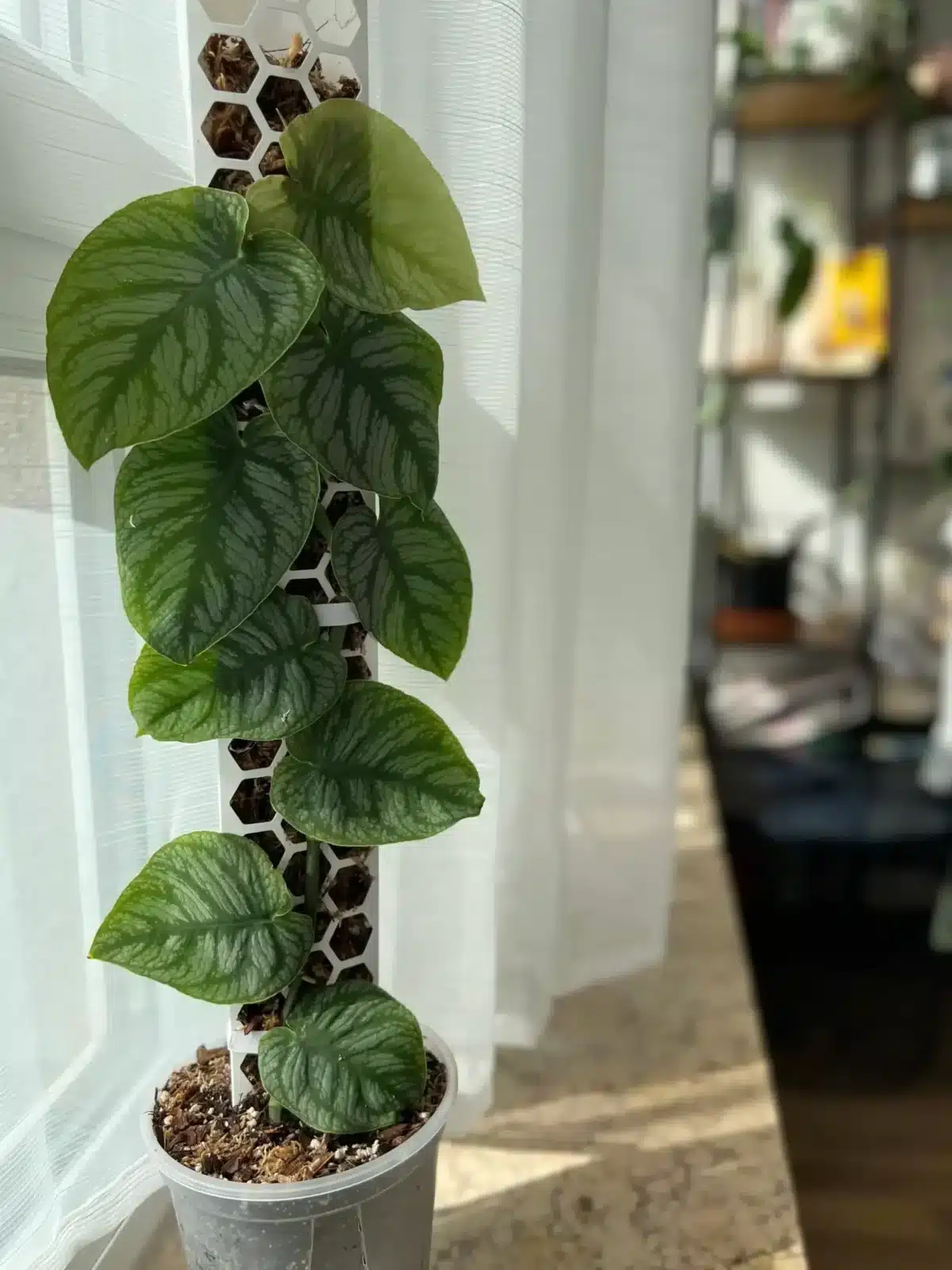
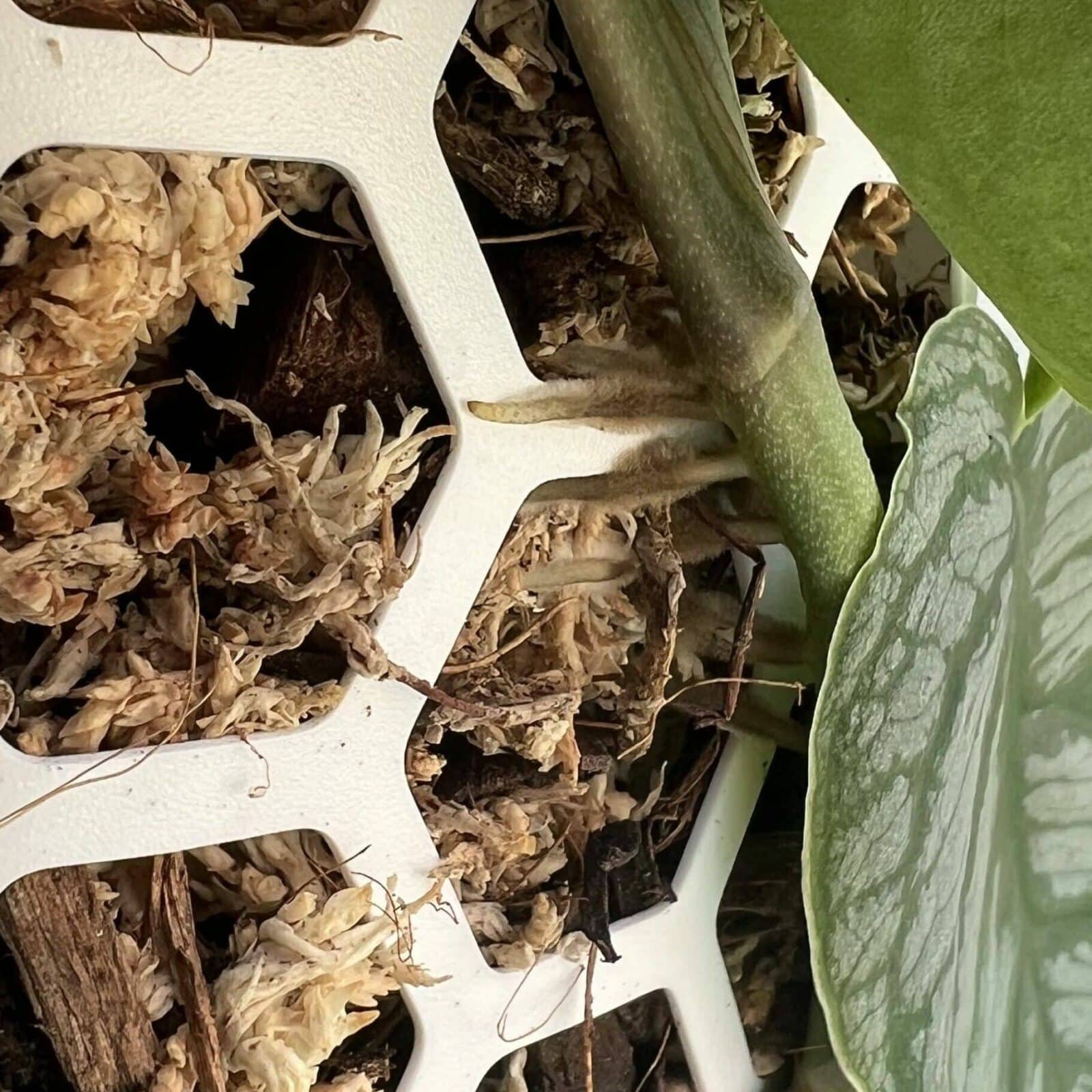
Monstera dubia requires well-draining, light soil. A mix for epiphytic plants containing peat, perlite and bark is ideal. One of the key factors for healthy growth is using the right support. A sphagnum moss pole is an excellent choice, as it provides sufficient air access to the roots and supports the plant’s natural growth habit. Sphagnum moss imitates the plant’s natural environment, encouraging healthy and natural growth.
5. Humidity
Monstera dubia likes higher air humidity (60–80%). Air that is too dry slows growth and can cause the leaves to turn brown; regular misting of the leaves helps. To monitor humidity in the room, you can use a hygrometer, and to increase it, use a humidifier or bowls of water placed on radiators or around the room.
6. Fertilizing
During the growing season (spring and summer), when Monstera dubia is actively growing,fertilize every 4 weeks with a balanced houseplant fertilizer. In winter, when the plant has less light (unless you use grow lights), it grows more slowly, so reduce fertilizing to avoid overfeeding. Keep watering regular, however, because dry indoor air causes the substrate to dry out faster.
7. Pruning
Monstera dubia usually does not need pruning. Remove only dry, damaged or diseased leaves and stems to keep the plant healthy and aesthetically appealing.
How to propagate Monstera dubia?
Monstera dubia is most commonly propagated using cuttings or rhizomes. Follow these steps:
1. Cutting
Choose a healthy, strong plant stem and, using clean, sharp scissors, make a cutting about 5-10 cm long. Make sure the cutting contains several leaves and at least one node, from which new roots will grow.
2. Preparing the cuttings
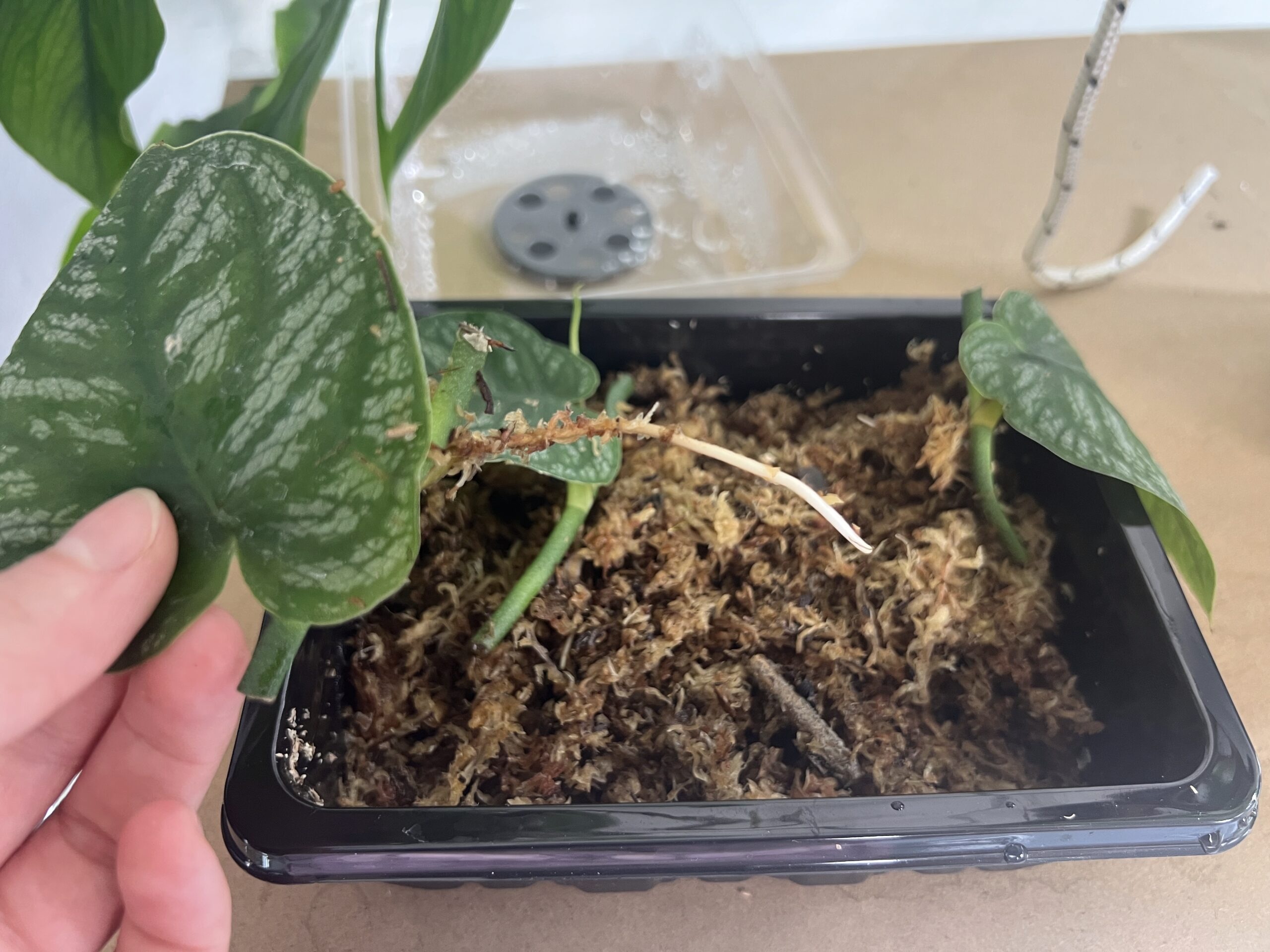
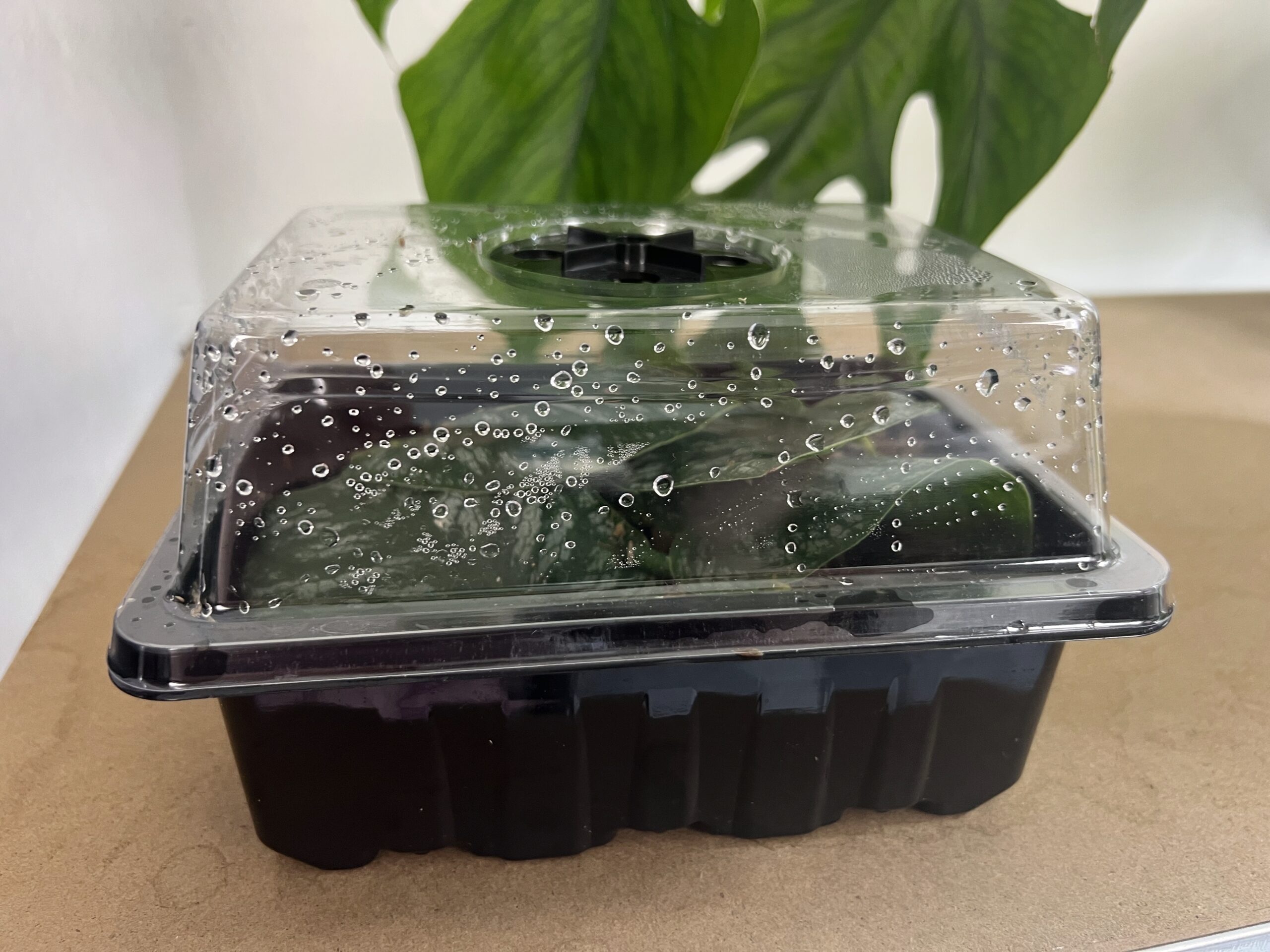
Remove the lower leaves so that the cut sections can be placed in sphagnum moss or water without the risk of rot. For propagation in water, make sure the node from which new roots will form is submerged. We have had the best results rooting in moist sphagnum moss in this practical propagator.
3. Rooting
After a few weeks, new roots should begin to form. Once the roots are strong enough (about 5 cm long), you can transplant the cuttings into a pot with well-draining soil. Using a sphagnum moss pole when transplanting will give the new plants ideal conditions for growth.
4. Caring for new plants
Newly propagated plants require the same conditions as the mother plant—plenty of light, moderate watering, and higher humidity. As they grow and develop a stronger structure, you can gradually move them to larger supports.
💡Tip: At the Gardemo Academy, you’ll find a video where we show you how to cut back a large Monstera dubia —be sure to watch it if you need to trim or repot your plant.

Benefits of Using a Sphagnum Moss Pole
Using a sphagnum moss pole when growing Monstera dubia offers several key benefits:
- Better moisture retention: Sphagnum moss maintains stable moisture around the roots, which is ideal for an epiphytic plant.
- Support for natural growth: Sphagnum moss mimics the plant’s natural environment, encouraging healthy, even growth.
- Antibacterial properties: Sphagnum moss has natural antibacterial properties that help prevent rot and mold.
- Adaptability: A sphagnum moss pole is flexible and easily adapts to the plant’s growth, making maintenance and propagation easier.
Tips and Tricks for Successfully Growing Monstera dubia
- Use a suitable pot: Choose a pot with good drainage to prevent the soil from becoming waterlogged.
- Monitor for pests: Check the plant regularly for pests such as aphids or spider mites, and use suitable products if needed.
- Encourage ventilation: Ensure there is adequate airflow in the room to prevent excess moisture and mold formation.
- Regularly rotate the plant toward the light source so it grows evenly.
Conclusion
Monstera dubia is a beautiful and relatively low-maintenance plant that can enrich any interior with its unique appearance. Proper care, especially the use of a sphagnum moss pole, can greatly contribute to its health and attractive look.